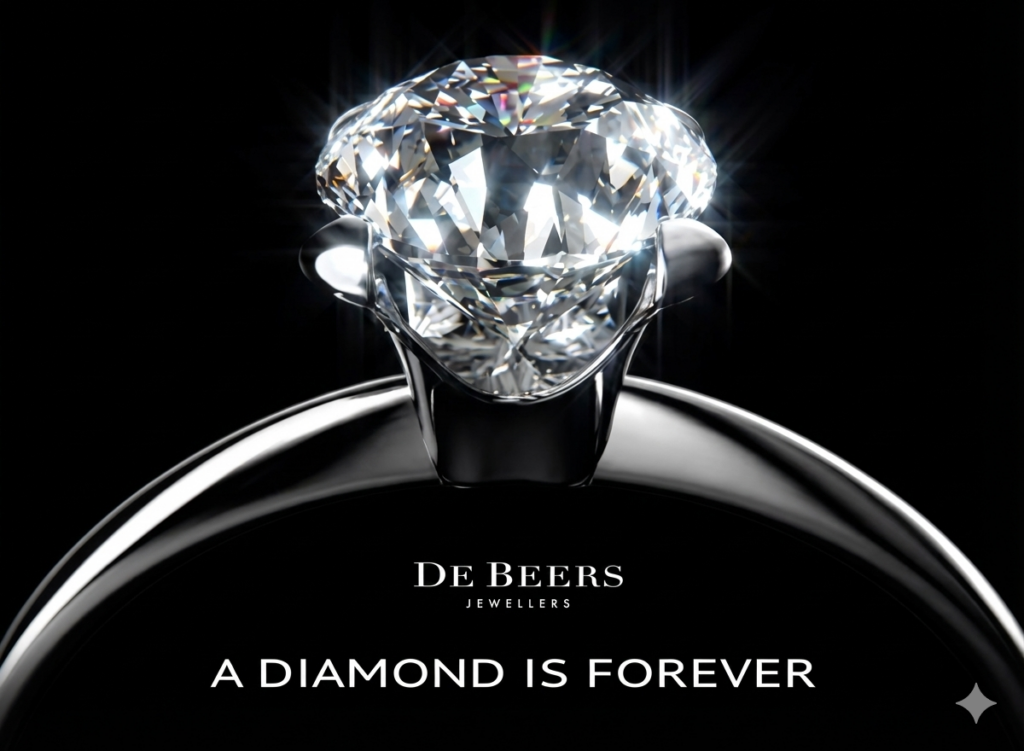
What if I told you that your engagement ring wasn’t a centuries-old tradition, but a calculated move by a 1940s ad agency? Before the iconic “A Diamond Is Forever”campaign, people were proposing with sapphires, rubies, emeralds even simple gold bands. So let’s spill the tea on how De Beersconvinced the entire world that a clear rock is the only way to say “I love you forever.”
Before Diamonds Ruled: Love Didn’t Always Sparkle This Way
Contrary to popular belief, diamonds were not always the default symbol of love or marriage. For centuries:
- European royalty preferred colored gemstones
- Wedding rings were often plain gold bands
- Engagement rings weren’t mandatory or even common
Diamonds existed, yes but they were just one gemstone among many. Hard? Sure. Magical? Not yet.
So what changed?
Enter De Beers: The Brand That Rewrote Romance
In the late 1800s, massive diamond deposits were discovered in South Africa. Suddenly, diamonds weren’t scarce anymore they were flooding the market.

This created a nightmare scenario for diamond companies: If diamonds are abundant, prices fall.
De Beers’ solution?
👉 Control the supply. Control the story. Control the emotion.
By the early 20th century, De Beers had established a near-monopoly, stockpiling diamonds and releasing them strategically to create an illusion of rarity.
But their most powerful move wasn’t economic.
It was emotional.
“A Diamond Is Forever”: The Most Powerful Marketing Line Ever Written
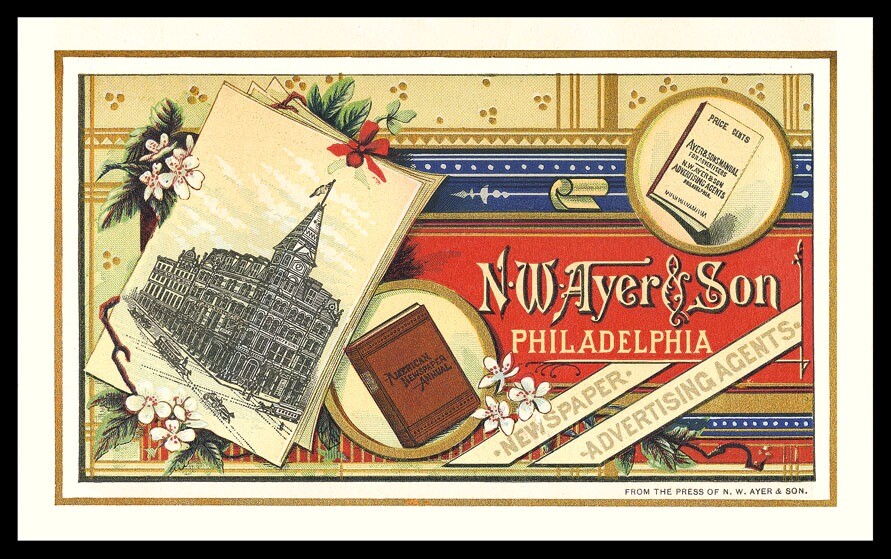
In 1947, De Beers hired ad agency N.W. Ayer. Their task? Make diamonds emotionally irreplaceable.
The result was a slogan that changed culture forever:
“A Diamond Is Forever.”
This wasn’t just a tagline. It was psychological genius.
The campaign subtly taught consumers that:
- True love is eternal
- Diamonds don’t lose value (emotionally or financially)
- Selling or reusing a diamond is almost morally wrong
- The bigger the diamond, the greater the love
Suddenly, diamonds weren’t jewelry.
They were proof.
How Diamonds Hijacked the Meaning of Proposals
Before De Beers, a proposal was about commitment.
After De Beers, it became about carat size.
The company even popularised the now-infamous rule:
Spend two months’ salary on an engagement ring.
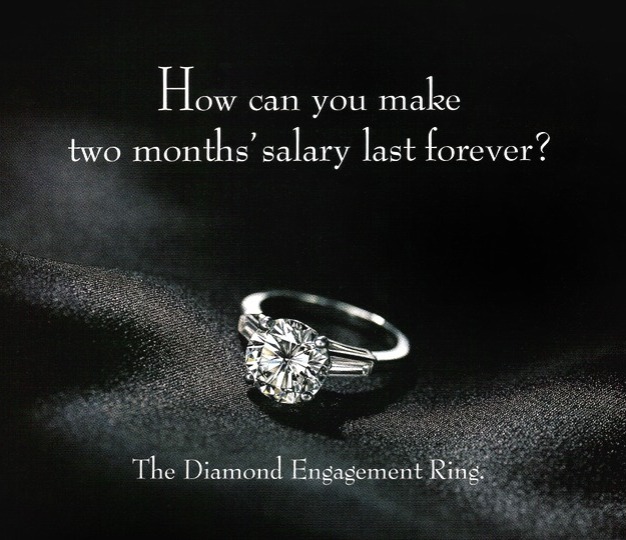
(This number was entirely made up — but wildly effective.)
As diamond size increased, so did perceived:
- Social status
- Financial stability
- Devotion
Love became measurable.
And diamonds became the scoreboard.
Are Diamonds Actually Rare? Let’s Be Honest
Here’s the uncomfortable truth:
❌ Diamonds are not rare.
Gem-quality diamonds exist in large quantities. What made them seem rare was:
- Controlled mining output
- Strategic stockpiling
- Carefully managed auctions
- Narrative-driven advertising
Scarcity wasn’t natural.
It was manufactured.
Why Diamonds Still Matter Even After the Truth
Knowing the history doesn’t make diamonds meaningless.
It makes them intentional.
Today, choosing a diamond can mean:
- Celebrating milestones beyond marriage
- Investing in craftsmanship
- Owning a piece of cultural history
- Redefining luxury without illusion
The symbolism has evolved and that’s a good thing.
Final Tea: Love Was Never About the Stone
Diamonds didn’t become eternal because they were rare.
They became eternal because a brand told a story and the world believed it.
Now, we get to rewrite that story.
✨ One where love isn’t measured in carats ✨ Where jewelry reflects identity ✨ And where meaning matters more than monopoly
Because forever was never about the diamond.
It was always about the choice behind it.
Want more untold jewelry stories, industry secrets, and luxury myths decoded?
Follow The Jewelry Gossips on Instagram for daily insider tea, trend breakdowns, and real conversations the jewelry world doesn’t like to have.
And if you’re ready to go deeper —
Visit the official The Jewelry Gossips website where we uncover jewelry scams, expose marketing illusions, and decode what luxury really means in today’s world.
Because sparkle is fun but knowledge is power.