Imagine a world where one of the biggest names in luxury jewellery has a direct stake in one of the world’s most influential diamond mining companies. It sounds like a powerful combination. And it might be closer than we think.
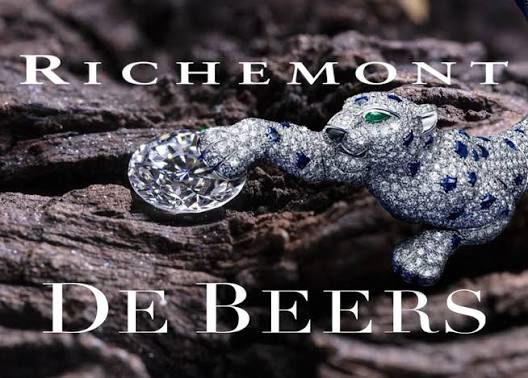
Richemont, the luxury group behind Cartier and Van Cleef & Arpels, is reportedly in talks to join a consortium bidding for De Beers. The potential investment could be worth around $1 billion for Anglo American’s controlling stake in the diamond giant.
But why would a luxury group want to invest in a diamond mining business? And why is De Beers looking for a new owner in the first place?
The timing is interesting. Natural diamond prices have faced pressure, lab-grown diamonds have become more affordable, and consumer buying habits are changing. Meanwhile, luxury jewellery brands continue to build their businesses around craftsmanship, rarity and exceptional gemstones.
This potential Richemont De Beers deal could bring two important parts of the diamond industry closer together: the people who mine diamonds and the luxury houses that turn them into desirable jewellery.
Nothing has been finalised yet. But the discussions have already raised an important question: could the luxury industry play a bigger role in protecting the future of natural diamonds?
What Is the Richemont De Beers Deal All About?

First, let’s understand what is actually happening.
In October 2026, Reuters reported that Swiss luxury group Richemont was discussing joining a consortium interested in buying Anglo American’s 85% stake in De Beers.
The consortium is led by Gareth Penny, De Beers’ former chief executive, who headed the company between 2006 and 2010.
According to the reports, Richemont could join other potential investors, including US jewellery retailer Signet Jewelers.
The proposed transaction is reportedly valued at approximately $1 billion for Anglo American’s 85% holding.
However, there is an important distinction here. Richemont is not confirmed as the buyer of De Beers. It is reportedly considering participating in a group of investors.
The remaining 15% of De Beers belongs to the Government of Botswana, which also has an important role in the proposed sale.
As of November 4, 2026, no completed acquisition or final Richemont investment has been announced.
Who Owns De Beers Right Now?

To understand the proposed deal, it helps to look at the company’s existing ownership.
De Beers is currently owned by two shareholders:
- Anglo American: 85% – The international mining group holds the controlling stake.
- Government of Botswana: 15% – The government is a long-standing shareholder and an important partner in De Beers’ diamond operations.
Anglo American announced plans to sell its De Beers stake in 2024 as part of a wider business restructuring.
The decision came during a difficult period for the diamond industry, with falling rough diamond prices, weaker demand and increasing competition from lab-grown diamonds.
Botswana’s position makes the sale more complicated. The country has a right of first refusal over Anglo American’s stake, meaning its contractual rights could influence how the transaction proceeds.
This is not simply a private business sale. It also involves a country with significant economic interests in the diamond industry.
Why Is Richemont Interested in Buying Into De Beers?
This is where the story gets interesting.
Richemont isn’t a traditional mining company. It is one of the world’s biggest luxury groups, with some of the most recognisable jewellery brands under its umbrella.
Its jewellery maisons include:
- Cartier: Known for iconic collections such as Love, Panthère and high jewellery creations.
- Van Cleef & Arpels: Famous for Alhambra, exceptional gemstones and intricate craftsmanship.
- Buccellati: Recognised for its distinctive goldwork and detailed jewellery techniques.
So why would a group like Richemont want to get involved in diamond mining?
The answer could be about much more than purchasing gemstones.
1. Greater Influence Over Natural Diamond Supply
Luxury jewellery houses need access to exceptional gemstones to create their collections.
Natural diamonds, particularly rare and high-quality stones, play an important role in high jewellery.
By investing in De Beers, Richemont could develop a closer relationship with the mining and sourcing side of the diamond industry.
This may offer greater visibility into diamond supply, sourcing and long-term availability.
However, an investment would not automatically give Cartier or Van Cleef & Arpels exclusive access to De Beers diamonds.
2. Protecting the Luxury Value of Natural Diamonds
The rise of lab-grown diamonds has changed the jewellery market.
Consumers can now purchase larger lab-grown diamonds at significantly lower prices than comparable natural stones.
This has created a challenge for natural diamond businesses.
Luxury brands, however, often sell more than the physical gemstone. Their products carry stories of heritage, craftsmanship, rarity and brand identity.
A stronger connection with natural diamond production could help Richemont support the category’s long-term luxury positioning.
3. Better Traceability and Responsible Sourcing
Today’s luxury consumers are increasingly interested in where their jewellery comes from.
They want to understand the origin of their diamonds and how they move through the diamond supply chain.
De Beers has developed Tracr, a diamond traceability platform designed to record information about a diamond’s journey.
A closer relationship between Richemont and De Beers could create opportunities to strengthen sourcing transparency and diamond provenance.
For luxury jewellery houses, this is becoming an increasingly important part of the customer experience.
4. A Long-Term Investment in the Diamond Industry
Richemont’s interest could also be a strategic investment in an industry that is going through a major transformation.
Instead of depending entirely on external suppliers, a luxury group could gain a financial interest in an important part of the natural diamond supply chain.
It would be a different approach to protecting its jewellery business, although the financial risks would also be significant.
Why Is De Beers Struggling?

De Beers has been one of the most influential companies in the diamond industry for more than a century.
Founded in 1888 in South Africa, it played a major role in shaping the global diamond trade and how consumers viewed diamonds.
Its famous 1947 slogan, “A Diamond Is Forever”, became one of the most recognised advertising lines in history.
But the diamond market of today looks very different.
There are three major challenges affecting the business.
1. The Rise of Lab-Grown Diamonds
Lab-grown diamonds have become one of the biggest talking points in the jewellery industry.
They have essentially the same chemical composition and crystal structure as natural diamonds. The key difference is their origin.
Natural diamonds form deep within the Earth over geological timescales, while lab-grown diamonds are created using specialised technological processes.
Lab-grown stones are generally much less expensive, making them attractive to price-conscious buyers.
Their increasing availability has placed pressure on lower-value natural diamond categories.
For De Beers, this creates a serious challenge: how does the company convince consumers that natural diamonds deserve their premium?
2. Weak Demand in China
China has historically been an important market for diamond jewellery.
However, consumer spending and luxury demand have faced pressure.
De Beers’ 2025 financial report highlighted muted demand in China, while its 2026 interim results continued to describe market conditions there as weak.
The United States and India have shown more encouraging demand signals, particularly in higher-value jewellery categories.
This matters because diamond mining companies depend on demand across several markets, not just one.
3. Falling Rough Diamond Prices
De Beers sells rough diamonds to manufacturers and industry clients.
When demand slows, manufacturers become more careful about purchasing new inventory.
This affects the entire diamond supply chain.
Lower rough diamond prices can reduce mining revenue and profitability, even when production volumes remain substantial.
De Beers’ 2025 financial results show how serious the situation has become.
| Financial metric | 2024 | 2025 |
| Revenue | $3.292 billion | $3.493 billion |
| Underlying EBITDA | -$25 million | -$511 million |
| Underlying EBIT | -$349 million | -$787 million |
| Average realised price | $152/ct | $142/ct |
The company recorded an underlying EBITDA loss of $511 million in 2025.
It also reported an underlying EBIT loss of $787 million.
These numbers show why Anglo American is looking to exit its investment.
Interestingly, De Beers still generated nearly $3.5 billion in revenue. Its challenge is not simply selling diamonds. It is generating sustainable profits in a difficult market.
What Do the Latest De Beers Numbers Tell Us?
De Beers’ third-quarter 2026 production report, published on October 20, offers another interesting look at the market.
Here are some key figures:
- Rough diamond production: 6.8 million carats.
- Total rough diamond sales: 9.8 million carats.
- Consolidated rough diamond sales revenue: $731 million.
- Average realised price: $84 per carat.
Production was down 11% compared with the third quarter of 2025.
However, rough diamond sales volumes increased by 71% year-on-year.
There is an interesting contrast here. Despite selling significantly more rough diamonds, consolidated sales revenue increased by only 4%.
The average realised price fell 45% year-on-year.
This highlights the pressure on diamond prices and the importance of understanding both sales volumes and selling values.
The report also noted improved consumer demand signals in the United States and India, while lower-value natural diamonds continued to face competition from lab-grown stones.
Could Botswana Become a Bigger Player in De Beers?
Botswana is one of the most important parts of this story.
The country already owns 15% of De Beers and has a long-standing diamond partnership with the company.
Diamond mining has played a major role in Botswana’s economy, supporting employment, government revenue and national development.
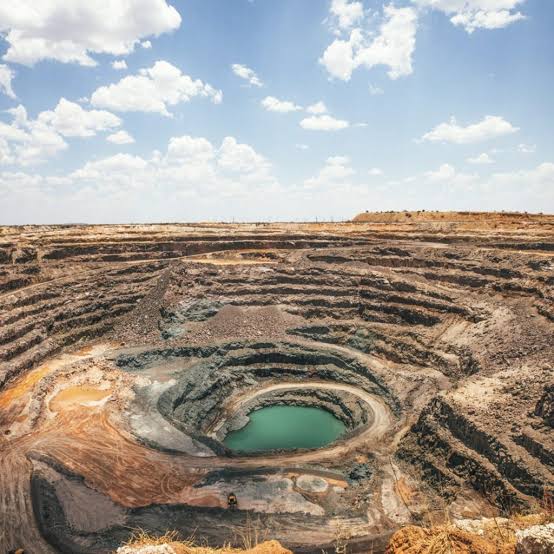
Botswana is also home to major diamond operations, including Jwaneng and Orapa.
With Anglo American looking to sell its controlling stake, Botswana has an opportunity to reconsider its position in the company.
Its existing ownership and contractual rights mean it cannot simply be treated as another potential investor.
There has also been reporting around the possibility of Botswana increasing its stake in De Beers.
However, no final ownership arrangement should be treated as confirmed until the parties announce an agreement.
The outcome could influence not only who owns De Beers but also how diamond-producing countries participate in the global diamond business.
Could Richemont Save the Natural Diamond Industry?
This is perhaps the biggest question surrounding the proposed investment.
Richemont has something that a traditional mining company does not: direct experience in selling luxury products to consumers.
Its jewellery brands understand how to create desire around gemstones, design and craftsmanship.
The group also has considerable financial resources.
In its financial results for the year ended March 2026, Richemont reported €22.42 billion in sales and a net cash position of approximately €8.5 billion.
Its jewellery maisons recorded an 8% increase in sales at actual exchange rates.
These figures demonstrate the strength of its luxury jewellery business.
But investing in De Beers would still be a major decision.
There are several challenges to consider:
- Market uncertainty: Natural diamond demand could take time to recover.
- Lab-grown competition: Lower prices continue to influence consumer choices.
- Operational costs: Mining is capital-intensive and requires long-term investment.
- Global demand: Changes in China, the United States and India can affect diamond sales.
- Ownership complexity: Botswana’s existing stake and rights could influence the final transaction.
Richemont may bring valuable luxury expertise to De Beers, but it cannot control consumer behaviour or guarantee a recovery in natural diamond prices.
The deal, if completed, would be a long-term strategic commitment rather than an instant solution.
What Could This Mean for the Future of Natural Diamonds?
The potential Richemont De Beers deal raises a bigger question about where the diamond industry is heading.
For years, the natural diamond business has relied heavily on rarity, emotional value and traditional luxury positioning.
Now, consumers have more choices.
Some buyers prefer natural diamonds because of their geological origin and perceived rarity. Others choose lab-grown diamonds because they offer a more affordable way to purchase diamond jewellery.
Both categories are now part of the modern jewellery market.
For natural diamonds, the opportunity may lie in clearer differentiation, stronger storytelling and better consumer education.
There are also changing buying habits worth watching.
De Beers’ 2026 US Diamond Acquisition Study found that non-bridal purchases accounted for 75% of natural diamond demand value in the United States in 2025.
Self-purchases, personal milestones and gifting are becoming important reasons to buy diamond jewellery.
The same study found that Gen Z had become the second-largest generation buying natural diamonds in the United States.
This challenges the assumption that younger consumers have completely moved away from natural diamonds.
For brands, the message is clear: the future of natural diamond jewellery may depend on reaching consumers beyond traditional engagement and wedding purchases.
If Richemont becomes part of De Beers’ ownership group, its luxury marketing experience could become relevant to this shift.
Final Thoughts: Is This the Beginning of a New Diamond Era?
The possible Richemont De Beers deal is about much more than a $1 billion transaction.
It brings together a luxury group known for Cartier and Van Cleef & Arpels, a historic diamond mining business, and a country with a major interest in the natural diamond trade.
For Richemont, the investment could offer a closer connection to natural diamond sourcing and the luxury value chain.
For De Beers, a new ownership structure could bring fresh capital, industry experience and a different approach to its future.
For Botswana, the transaction could influence its economic interests and position in the global diamond industry.
But there is no guaranteed happy ending. The diamond market still faces pricing pressure, changing consumer preferences and competition from lab-grown alternatives.
As of November 4, 2026, the proposed investment remains unconfirmed.
One thing is certain: the next chapter of De Beers could become one of the most important developments to watch in the global jewellery industry.
And the question isn’t just who will own De Beers. It’s who will shape the future of natural diamonds.
Frequently Asked Questions (FAQs)
1. Is Cartier buying De Beers?
No acquisition by Cartier has been announced. Richemont, the parent group of Cartier, has reportedly been in talks to join a consortium bidding for Anglo American’s 85% stake in De Beers.
2. How much is the De Beers acquisition worth?
The reported value of Anglo American’s 85% stake is approximately $1 billion. This should not be confused with a confirmed valuation or final purchase price for the entire company.
3. Who currently owns De Beers?
Anglo American owns 85% of De Beers, while the Government of Botswana owns the remaining 15%.
4. Why does Richemont want to invest in De Beers?
A potential investment could give Richemont greater influence over natural diamond sourcing, supply-chain transparency and its long-term luxury jewellery strategy.
5. Who is leading the consortium bidding for De Beers?
The consortium is led by Gareth Penny, De Beers’ former chief executive. Richemont and other potential participants have been linked to the discussions.
6. Why is De Beers struggling financially?
De Beers has faced falling rough diamond prices, weaker demand in China, inventory pressure and increasing competition from affordable lab-grown diamonds.
7. Will the De Beers acquisition change natural diamond prices?
It is too early to say. Even if the acquisition is completed, natural diamond prices will continue to depend on global demand, supply, consumer preferences and market conditions.
Blog References
- Reuters – Richemont in talks to join bid for De Beers, October 15, 2026
- De Beers Group – Preliminary Financial Results for 2025
- De Beers Group – Third Quarter Production Report, October 2026
- De Beers Group – Interim Financial Results for 2026
- Richemont – Financial Results for the Year Ended March 2026
- De Beers Group – Our History and Heritage
- De Beers Group – The Diamond Report, June 2026
- De Beers Group – Corporate Governance and Ownership